
Introduction
Confidentiality agreements, also known as non-disclosure agreements (NDAs), play a vital role in safeguarding sensitive information. Whether you’re a business owner, an employer, or an individual engaged in professional relationships, understanding how to draft and utilize confidentiality agreements is essential. In this article, we will delve into the process of writing a confidentiality agreement, discuss the drafting of NDAs, provide an example and types of confidentiality agreement clauses, clarify the distinction between NDAs and confidentiality agreements, and provide you with a confidentiality agreement template at the end of this article.
Why are confidentiality agreements important?
A standard written contract known as a confidentiality agreement safeguards the owner of an innovation or business idea. Additionally, it is a crucial document that needs to be kept private between two businesses that are debating a merger or other business transaction.
Any company employee or contractor with access to sensitive information is frequently compelled to sign a confidentiality agreement to prevent the revelation of competitive information that could be detrimental to the company. If more than one party has access to sensitive information, the agreement may be unilateral (signed by one party), bilateral (signed by both parties), or multilateral.
Click Here for AI Startup Valuation Guide.
What Do confidentiality agreements protect?
Knowledge of confidential company information, including trade secrets and corporate plans, is one of the most frequently protected categories of information. This contains technical and business data like product development instructions or in-house market research done by the corporation. To protect against dangers like market manipulation and insider trading, it also includes information about ongoing private circumstances like litigation or merger and acquisition investigations.
Confidentiality agreements frequently include executive compensation. A contract may also lay out the permitted uses of the disputed information and prohibit specific uses by either party. Confidentiality agreements can cover any information; the only requirement is that the information be disclosed between the parties to the agreement.
Click Here for AI Startup Valuation Guide.
Confidentiality agreement vs NDA
While NDAs and confidentiality agreements serve a similar purpose, they can differ in scope and application. An NDA is typically used when parties desire to protect confidential information during a specific business transaction or negotiation. On the other hand, a confidentiality agreement can have a broader scope and may encompass ongoing relationships between individuals or entities. It’s important to consult with legal professionals to determine the most appropriate type of agreement based on your specific needs and circumstances.
Click Here for AI Startup Valuation Guide.
Drafting an NDA
A particular kind of confidentiality agreement that is frequently used in corporate contexts is a non-disclosure agreement (NDA). The process of drafting an NDA follows similar principles to writing a confidentiality agreement. Start by identifying the parties involved and the purpose of the agreement. Clearly define what constitutes confidential information and establish the scope of protection. Specify the duration of the NDA and outline the responsibilities of the recipient. To ensure precision and accuracy in the drafting process, seeking legal advice is recommended.
Click Here for AI Startup Valuation Guide.
Types of Confidentiality Agreements
Two primary kinds of confidentiality agreements are frequently employed in professional settings:
Unilateral vs. Bilateral
Unilateral confidentiality agreements are one-sided contracts that only impose restrictions on the recipient, true to their name. Contrarily, a bilateral agreement places the responsibility for safeguarding each other’s information on two parties (or more, in the case of a “mutual” confidentiality agreement). Bilateral agreements are usually made between two cooperating businesses, although unilateral agreements may be more common and are regularly utilized by businesses to restrict personnel.
Further Classifications
The sort of parties engaged is typically what further differentiates various secrecy agreement types. To safeguard unpatented innovations, inventors employ “inventor agreements”. An “employee non-disclosure agreement” is provided by companies to their staff, whereas an “interview non-disclosure agreement” prevents rejected job candidates from exposing information they gained during their interactions with an employer. A “standard” confidentiality agreement is a blanket clause that can apply to many different circumstances.
Click Here for AI Startup Valuation Guide.
How to Write a Confidentiality Agreement
Sharing sensitive or confidential information while beginning a business relationship frequently helps the partnership succeed. However, it can be dangerous to reveal sensitive information, whether it be a new company concept, a trade secret, or financial data.
A comprehensive guide for creating a confidentiality agreement is provided below.
Parties
Identify the parties to the agreement, their full legal names, addresses, and any relevant relationships with companies. To create a binding agreement, it is crucial to accurately represent the parties.
Definition of Confidential Information
This essential portion establishes the boundaries of protected information by outlining what the disclosing party deems to be confidential. Although a confidentiality agreement may be invalidated in court if it is overly broad and unreasonably unenforceable, more expansive definitions of what is confidential are typically desired by the disclosing party when negotiating an agreement. It’s typically better for the recipient to look for specific guidelines on what constitutes confidentiality.
Purpose
Give a succinct and unambiguous explanation of the agreement’s goal. This section should explain why the parties are entering into the confidentiality agreement, such as to preserve confidential information during an employee engagement or to explore a potential business partnership.
Define the Confidentiality Agreement’s Purpose.
When creating a confidentiality agreement, be sure to specify exactly what is covered. Include all of the sensitive material you are required to keep private by the agreement, such as client information, financial details, and business secrets.
The parties engaged, including the ones sharing and receiving information, should also be identified in the agreement.
Outline Potential Exclusions
Exclusions are details or situations that aren’t covered by the contract and that can be revealed without jeopardizing the confidentiality agreement.
Public information, such as that found on a company website or in public records, maybe a common exclusion. Additionally, the clause may not apply to material that became public without the recipient’s fault, such as information shared in a public speech or presentation.
Define Confidentiality Terms
The permissible use of confidential information should be spelled out in the agreement. It may specify that a business partner may only utilize private information for a certain objective, such as assessing a potential partnership or business deal.
The agreement should also contain clauses that forbid the recipient from using private information without the consent of the party that disclosed it.
Outline Consequences
To act as a deterrent against the unauthorized disclosure of confidential information, specify the penalties for breaking the agreement. It might outline potential repercussions for monetary losses, injunctive remedies, reputational harm, and the breakup of the business partnership.
Ownership of Information
This element is crucial because it clarifies any doubt regarding the recipient’s rights (or lack thereof) to the material in question, even though it is not the focus of a confidentiality agreement. The recipient must typically accept that the revelation of confidential material to them does not confer any ownership rights on them and that the disclosing party retains ownership.
Term Length
Some secrecy agreements are binding indefinitely and lack a clear endpoint. Others define a timeframe that is constrained by events without a timestamp or by a specified period, such as the length of a recipient’s employment with a disclosing company. Agreements should state when and under what circumstances any party may end them early.
Governing Law
Name the legislation that will be used to interpret the agreement. This establishes which jurisdiction’s laws shall control the agreement’s interpretation, legality, and enforcement.
Consult With a Lawyer
A lawyer with expertise in contract law can provide valuable guidance and advice, which can ensure the agreement is legally sound and enforceable. For a comprehensive guide on contract drafting basics, consult a professional contract attorney. They can provide expert guidance and ensure your confidentiality agreement is legally sound.
A confidentiality agreement must comply with specific legal requirements, such as state and federal laws, to be valid and enforceable. A lawyer can ensure the contract meets all necessary legal requirements and is compliant with the applicable laws.
Click Here for AI Startup Valuation Guide.
Example of a Confidentiality Clause
A typical confidentiality clause in an agreement may read as follows:
“The receiving party agrees to hold all confidential information disclosed by the disclosing party in strict confidence. This includes but is not limited to, trade secrets, proprietary information, customer data, and financial records. The receiving party shall use the confidential information solely for the purpose stated in this agreement and shall take all reasonable measures to prevent unauthorized disclosure. The obligations of confidentiality shall remain in effect for a period of [duration]. In the event of a breach, the receiving party shall be liable for damages as determined by law.”
Click Here for AI Startup Valuation Guide.
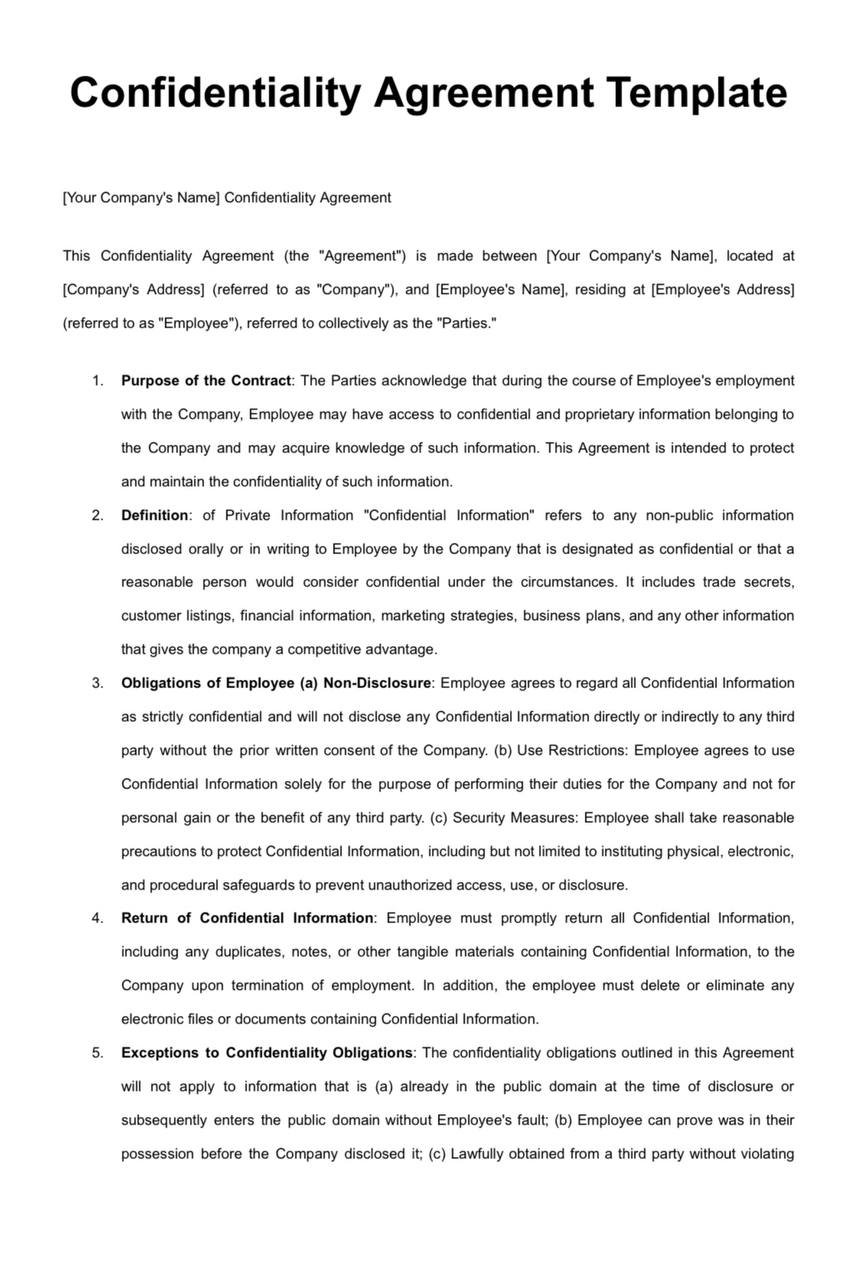
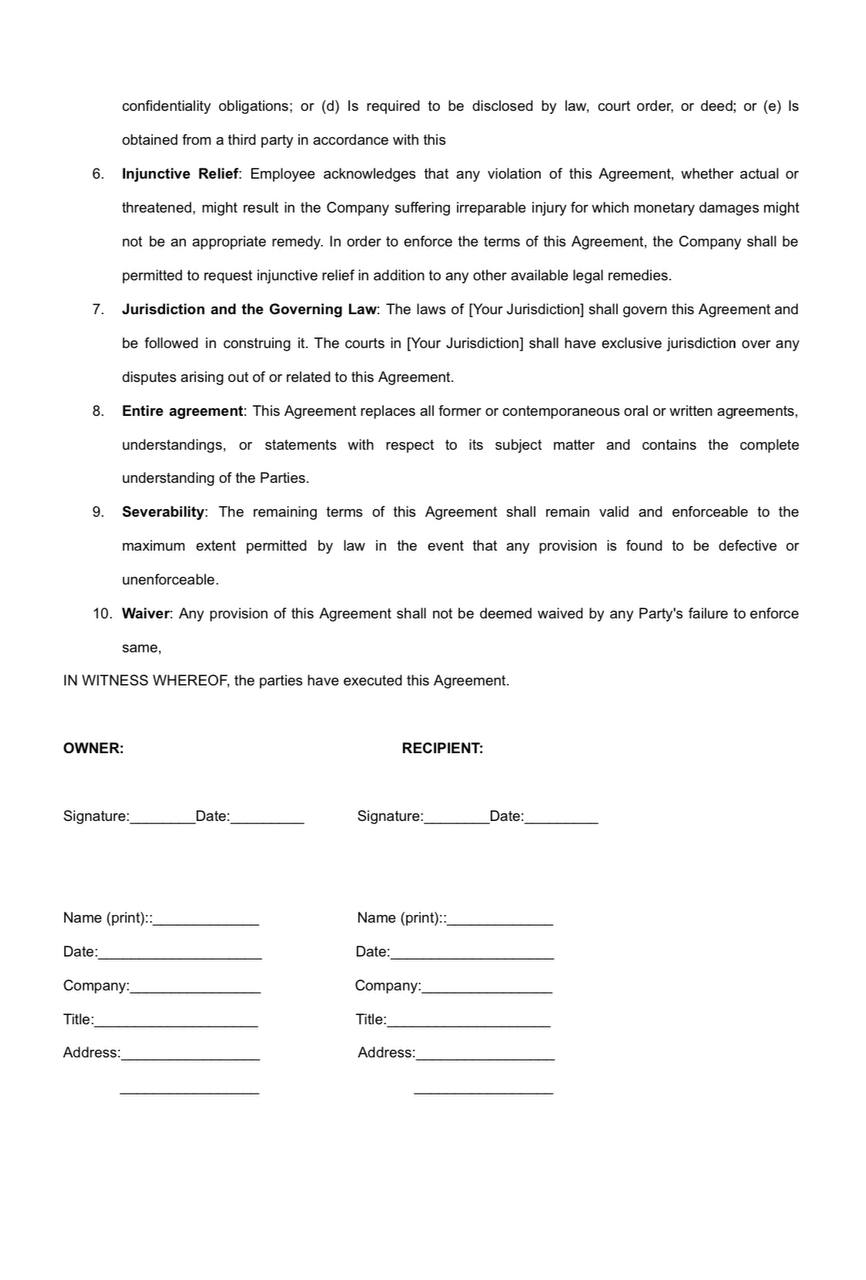
Confidentiality Agreement Template
Click Here for AI Startup Valuation Guide.
Conclusion
Confidentiality agreements and NDAs are valuable tools for preserving the integrity of sensitive information. By understanding how to draft these agreements effectively and distinguishing between the two, you can ensure that your confidential information remains protected. Remember, consulting with legal experts will provide the necessary guidance to create robust agreements tailored to your specific requirements.
Click Here for AI Startup Valuation Guide.
Our team of advanced patent attorneys assists clients with patent searches, drafting patent applications, and patent (intellectual property) agreements, including licensing and non-disclosure agreements.
Advocate Rahul Dev is a Patent Attorney & International Business Lawyer practicing Technology, Intellectual Property & Corporate Laws. He is reachable at rd (at) patentbusinesslawyer (dot) com & @rdpatentlawyer on Twitter.
Quoted in and contributed to 50+ national & international publications (Bloomberg, FirstPost, SwissInfo, Outlook Money, Yahoo News, Times of India, Economic Times, Business Standard, Quartz, Global Legal Post, International Bar Association, LawAsia, BioSpectrum Asia, Digital News Asia, e27, Leaders Speak, Entrepreneur India, VCCircle, AutoTech).
Regularly invited to speak at international & national platforms (conferences, TV channels, seminars, corporate trainings, government workshops) on technology, patents, business strategy, legal developments, leadership & management.
Working closely with patent attorneys along with international law firms with significant experience with lawyers in Asia Pacific providing services to clients in US and Europe. Flagship services include international patent and trademark filings, patent services in India and global patent consulting services.
Global Blockchain Lawyers (www.GlobalBlockchainLawyers.com) is a digital platform to discuss legal issues, latest technology and legal developments, and applicable laws in the dynamic field of Digital Currency, Blockchain, Bitcoin, Cryptocurrency and raising capital through the sale of tokens or coins (ICO or Initial Coin Offerings).
Blockchain ecosystem in India is evolving at a rapid pace and a proactive legal approach is required by blockchain lawyers in India to understand the complex nature of applicable laws and regulations.

 Law Office of Rahul Dev
You must be logged in to post a comment.